WHERE’S YOUR ACHE?
Posture can show up differently from person to person. Let's look at some of the patterns we commonly see and what they can tell us about how your body is organized.
COMMON POSTURE PATTERNS
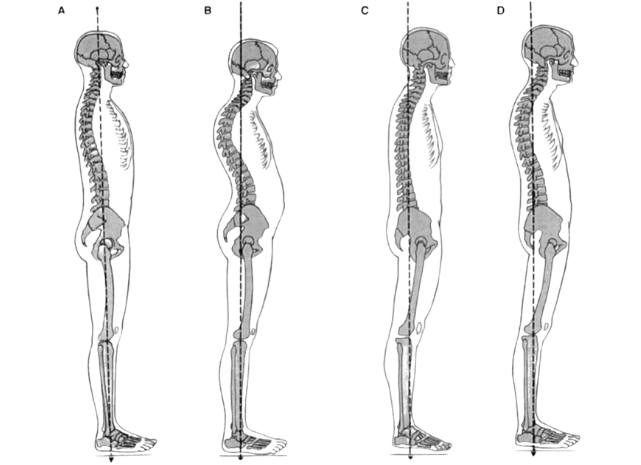
Lumbar lordosis
with Kyphosis +
Forward head
Ideal
Flat-back
Fatigue
There are many different ways the body can organize itself around the ideal plumbline. The patterns we commonly see include flat back, lumbar lordosis (often with kyphosis and a forward head posture) and fatigue posture.
You may also have characteristics of more than one pattern.
Sometimes posture is associated with aches or discomfort. Sometimes you're simply aware that something doesn't feel or move the way you'd like.
The first step is understanding how your body is organized and what it may need.
THE PLUMBLINE GIVES US THE REFERENCE.
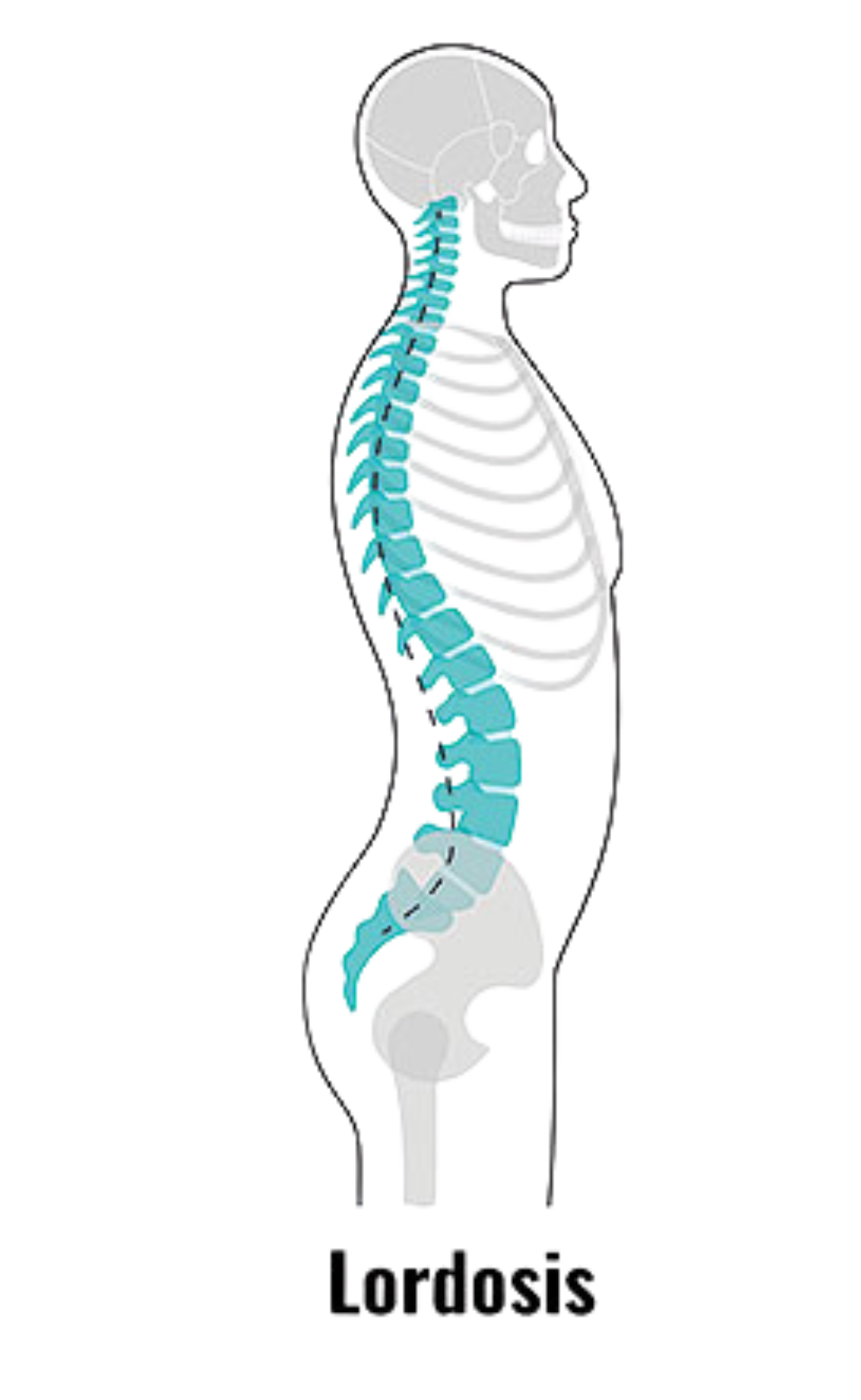
LUMBAR LORDOSIS
Have you ever noticed someone standing or walking with a pronounced arch through their lower back?
There can be different factors influencing how the pelvis, hips and lower back organize.
We look at the relationship between those areas and what your body is able to control.
Spending long periods sitting can influence how the hips and pelvis move and how the body organizes when you stand again.
KYPHOSIS
(ki-Foh-sis)
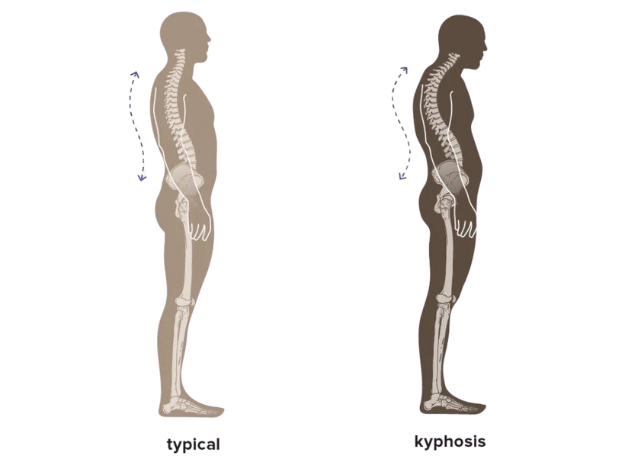
Kyphosis refers to an increased curve through the thoracic spine, or upper back. This is something I understand personally. I developed a pronounced kyphotic posture earlier in my life, which became more noticeable as I lifted weights in my teenage years. One injury led to another until I found Pilates.
Working on my mobility, strengthening my core and developing better organization through my pelvis, spine and ribcage helped me change how I moved.
That experience continues to influence how I teach today.
FORWARD HEAD POSTURE
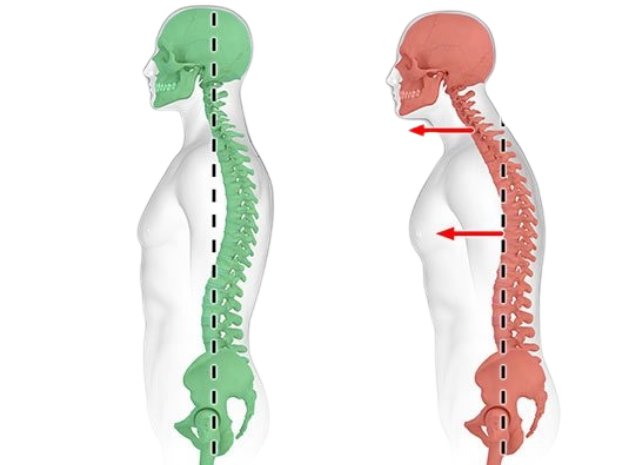
Healthy Posture
Forward Head Posture
Are you a people watcher?
Look around you — on the bus, in line, at work or while someone is looking at their phone. Notice where their head sits in relation to the rest of their body.
Health professionals call this Forward Head Posture: the head sits ahead of the body. The muscles in the back of the neck become shorter while the muscles at the front become longer. Imagine the amount of work those muscles have to do, for hours on end, when you add up how much we use our phones.
We don't simply tell you to pull your head back. We look at the relationship between the head, neck, upper back and ribcage, and what may be limiting your ability to organize them.
FLAT BACK
Have you ever noticed someone whose lower back looks almost straight, with very little curve?
In a flat-back posture, the pelvis tends to tuck under and the natural curve of the lower back is reduced. The hips sit in a more extended position, and the head often drifts forward to balance the body.
The muscles at the back of the thighs are often shortened (tight), while the muscles at the front of the hips are often lengthened (loose).
We don't simply ask you to arch your back. We look at how your pelvis is positioned, how your hips move and whether you have the range, strength and control to find a more natural curve.
FATIGUE POSTURE
Do you find yourself standing with your hips pushed forward and your weight resting on one leg, or leaning on whatever is nearby?
Fatigue posture is often called sway back. The pelvis shifts forward of the plumbline and the upper body leans back to balance it. Instead of the muscles holding you up, the body ends up resting on the joints and ligaments.
It can feel like the easiest way to stand, and that's the point. The body has found a way to stay upright with as little muscular effort as possible.
We look at how your pelvis, ribcage and head are stacked, and work to build the support through the trunk and hips that lets your body hold itself up with less effort, not more.
The Pilates apparatus gives us different ways to work with range and resistance at the same time. Springs can provide assistance, feedback or resistance depending on what your body needs.
Come Learn more about yourself
Pilates is not a substitute for medical care. If you have a medical condition or persistent pain, speak with your doctor or qualified healthcare professional before beginning exercise.